
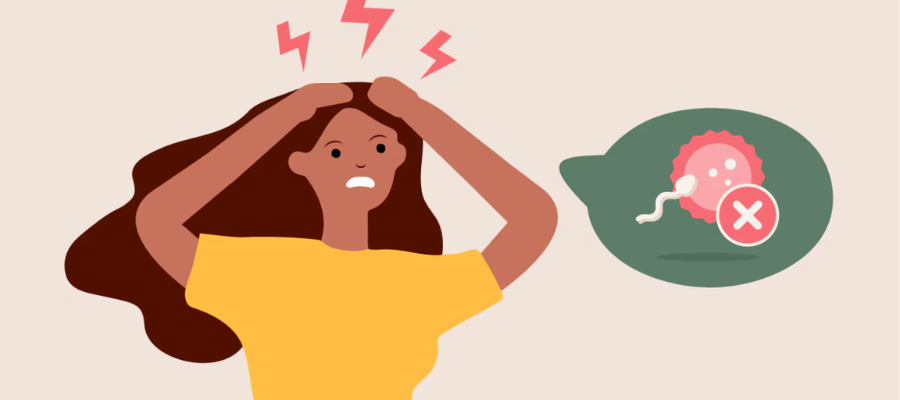
CAN STRESS AFFECT FERTILITY?
-Dr.Shruti Mane ,
Fertility & IVF consultant
Stress is often defined as an event that a person sees/ feels is threatening. The event or cause which leads for an internal response of stress is termed as stressors
Types of stress
Acute stress: Suddenly occuring event, short lived, threatening event (robbery / giving a speech/ exams/going for an interview)
Chronic stress: ongoing environmental demand( relatiosnhip/marital conflicts/ diagnosed with infertility and the treatment is too prolonging ,or fear of failure of treatment) Stress affects our reproductive health by altering the H-P-O axis (normal hormonal pathway). It leads to production of cortisol which is also known as a “stress hormone” from the adrenals which in turn affects most of our systems in the body. Cortisol when produced in excess in response to chronic stress can cause hormonal imbalances in both males and females. We are going to focus on how this hormone affects our reproductive health/Fertility
In Males
Chronic stress leads to reduced testosterone levels leads to loss of libido or decreased sexual arousal leading to sexual dysfunction such as erectile dysfunction, premature ejaculation.
It also leads to diminished sperm production due to decreased levels of testosterone hence affecting the normal semen parameters like count and motility of sperms.
In Females,
Due to increase in the levels of cortisol there is an imbalance between the levels of progesterone and estrogen. If cortisol is produced in excess the estrogen excretion in the body gets delayed leading to accumulation of estrogen and causing a state of estrogen dominance Hence causing irregular periods, anovulation, weight gain. Progesterone is the hormone required for maintenance of pregnancy. When cortisol is produced in excess it decreases the production of progesterone as the precursors required for production of progesterone are same as that of cortisol. Hence may also negatively impact implantation of the embryo or decidualization of the endometrium so that it is appropriate for implantation.
In conclusion stress in small amounts may not be considered one of the factors for infertility or affecting reproductive health, but when is chronic should be addressed and given a holistic approach.